👋 Hello, I am
Chandana Daggupati
Data Analyst and Full-Stack Web Developer based in the Ireland

👋 Hello, I am
Featured Projects
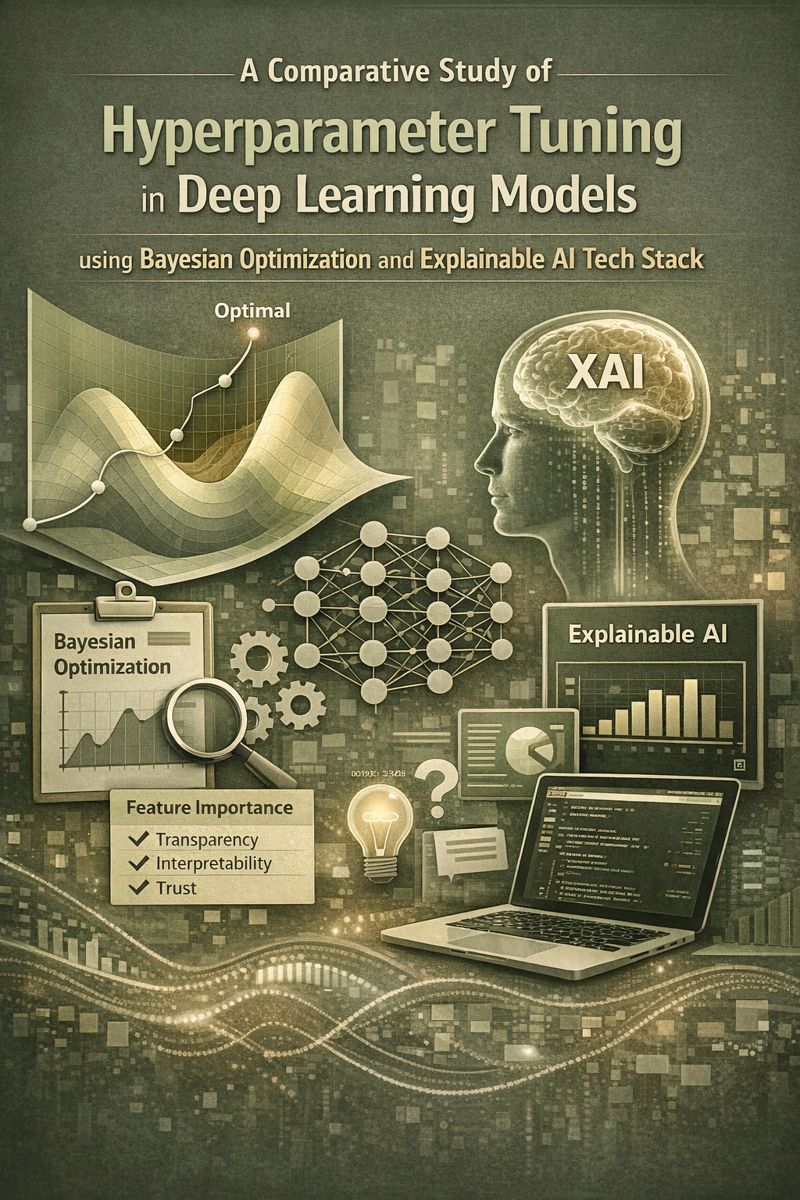
The study compares CNN, ResNet50, MobileNet, InceptionNet, and RegNet models for detecting rice plant diseases, using Bayesian Optimization to tune hyperparameters like optimizer, activation, and batch size for improved accuracy and performance. The research uses LIME (Local Interpretable Model-Agnostic Explanations) to visualize and interpret how tuned hyperparameters influence model predictions, enhancing trust and transparency in deep learning models. MobileNet consistently showed the most balanced and robust results, while other models ResNet and InceptionNet had trade-off between recall and precision, reinforcing the value of Bayesian tuning combined with XAI for model refinement
Learn moreDeveloped an end-to-end fraud detection system using the CRISP-DM framework, combining advanced preprocessing, feature engineering, and resampling methods (SMOTE, ADASYN) to address severe class imbalance in credit card transaction data. Achieved a high-performing model (F1-score: 0.90) using XGBoost with SMOTE, outperforming baseline classifiers like Logistic Regression and Random Forest while explaining model transparency through SHAP-based interpretability. Engineered behavioral, temporal and statistical features to capture fraud signals, and validated the system using cross-validation and precision-recall metrics for robust performance on highly imbalanced datasets.
Learn more

The study proposed a transformer-based ensemble approach for sarcasm detection on the SARC dataset, achieving the highest overall performance with a Weighted Soft Voting Ensemble Macro F1-score of 0.784. This ensemble, composed of models including BERT, RoBERTa, and a noise-trained Perturbed BERT, provided high class consistency with F1-scores of 0.786 (Sarcastic) and 0.781 (Non-Sarcastic). Individual models like RoBERTa (0.781 Macro F1) and Perturbed BERT (0.770 Macro F1) demonstrated superior performance over traditional baselines, validating the robust training strategy.
Learn more